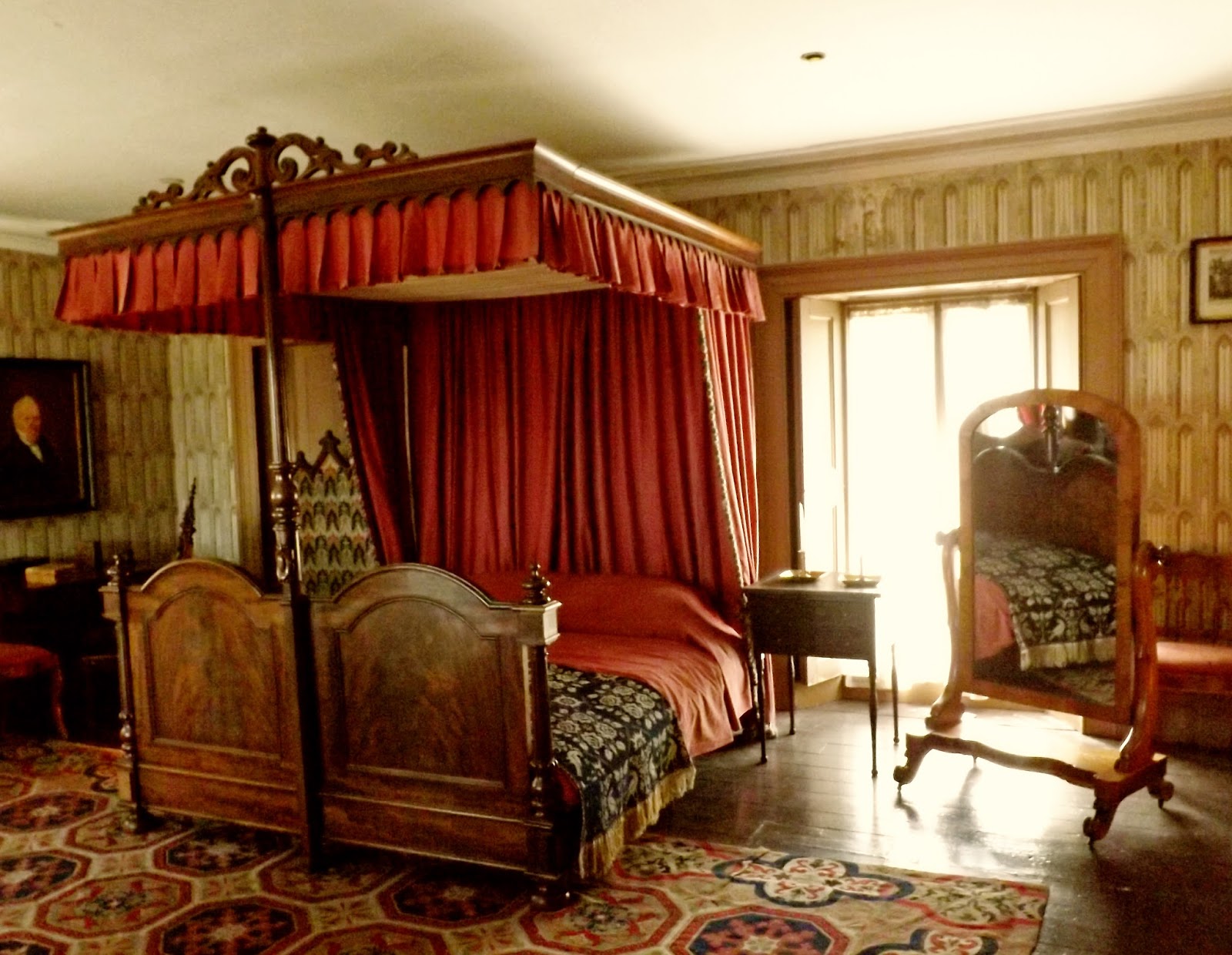
Descending a narrow back staircase revealed a stark contrast between the upstairs and downstairs worlds of Dundurn Castle.
Gone was the light and airy, ornamental atmosphere of richness and grandeur. In its stead were rough stone floors, whitewashed brick walls, and halls filled with darkness, breached by the occasional light from an ensconced candle or two. But for all it's utilitarian appearance, there was a warmth downstairs I had not perceived in the rooms above. An affability perhaps brought about by the nature and purpose of the people who had worked and lived in these rooms.
Caring for a noble household is by no means a small task. Certainly such servitude was, and still is, filled with endless days of bone aching weariness and toil. Yet I doubt very much that the people working in Dundurn Castle would have considered it an unfair chore to be assigned such duties while the MacNab family reaped the benefits from their hard work. There was a sense of pride in a job well done, not to mention a sense of security brought by a hot meal and a warm bed at the end of the day.
Being hired by a wealthy house was a good position during a time when everyone worked hard to scrape a living from dawn until dusk. The employ of a person such as Sir Allan MacNab also brought with it a certain amount of social esteem, especially when said employer was keen enough to consider comforts such as building windows in the outside facing rooms of the basement, providing an abundance of light in what would otherwise have been endless gloom.
 |
| Basement staircase. Used only by servants, the division of social classes reigned supreme in 1835. Servants went upstairs to clean and do their chores never to socialize with the MacNab family. Lady MacNab directed the butler (Wellington--is there a more fitting name for a butler?) and the cook (Old Anne--not Mrs. Patmore, unfortunately, though much of the castle downstairs did remind me of Downton Abbey) who in turn directed the lesser staff. |
 |
| Without electricity, lighting was a problem throughout the house, especially downstairs where the rooms were dark and the floors uneven. Each window in this house was imported from England by boat, an expensive journey for glass to make. Yet MacNab allotted one, sometimes three or four windows to be built in the basement walls, providing an abundance of sunshine to reach the servants below, assisting them with their tasks and cutting costs on candles, oil and eventually gas lamps. |
 |
| The cook's bedroom. No windows here as you can see, and probably quite cozy because of it as windows were single paned and though they let in light, they also let in winter drafts. Bed, cupboard, pretty paper on the walls, a small mirror for dressing; functional simplicity with a personal touch of pictures and framed photos. |
 |
| Small washstand in the cook's bedroom. |
 |
| The dairy room. That's a round of cheese under the netting (to keep insects at bay)on the table and eggs in their holder. Milk was gathered from the estate cows and churned into butter. Just imagine the taste of that fresh butter on fresh baked bread, still warm from the oven...YUM! This room is clean and efficient, just like all of Dundurn Castle. No refrigerators, but perishables were kept in a lead lined chest and this whole room was kept cool by it's proximity to...The Ice Pit. |
 |
| This is The Ice Pit. What is an ice pit, you ask? It's a remarkable natural refrigeration system, which allowed Dundurn Castle to enjoy the benefits of icecold goodness all year round. I know, from having gone cave exploring a time or two, that water can stay frozen underground when surrounded by rock and out of the light, even in the high heat of summer. The same goes for this deep pit, chiselled into the stone. Blocks of ice were cut on the bay during winter and hauled back to the estate, where they were lowered into the pit (I'm guessing that window at the top would have served as a chute) and packed with straw to keep it insulated. It must have been an interesting job to cut off a chunk when needed for use in the dairy or other rooms. But what a luxury--ice even in the hot, humid summer. Impressive to serve cold drinks to guests, not to mention chilled deserts. Ice cream anyone? |
 |
| The brewery. What grand house can possibly exist without it's very own brewery? The beer produced would have been primarily for the serving staff. |
 |
| The Kitchen. All of the beautiful light in this room is coming from the widows. Cheery and clean, it boasted this fireplace for pots and kettles as well as an impressive cast iron stove and oven for baking. |
 |
| Wash basins in the kitchen. Scrub brush for cleaning and soap in a basket. Water came down the wooden chute with a hand pump attached. Dishes were washed in a separate scullery room. |
 |
| One of the historical cooks left open their recipe book. This room was warm and cheery and smelled exquisite. |
 |
| Hells bells. These bells in the kitchen were the receiving end of the bell pulls secreted in the upstairs rooms. Each had it's own distinctive ring and signalled when one the household required attention. Like an old fashioned pager system, they no doubt had a habit of going off when a person was most busy with another task and I can well imagine the sighs from the staff followed by a muttered, "What does she want NOW?" |
 |
| Nom, nom, nom :) The kitchen is probably the highlight of the downstairs tour in that the Castle cook likes to give out samples of real food to try. By real food, I mean, food prepared from ingredients grown on the estate garden, using heritage seed and heritage recipes. No preservatives or processed shortcuts here. Those tomatoes were still warm from the sun and tasted divine. The kids in the group were allowed to sample shortbread. There was also fresh baked bread and a jam which looked like strawberry but was actually made from tomatoes and tasted wonderful. My son, who hates jam, tied some and loved it! There's something to be said for authentic cooking. Makes me wish I had more time. |
 |
| The laundry. The laundress was one of the few servants hired on as needed each week and considered a specialist. Most homes would not have their own room set aside for laundry (most homes were single story and four rooms total with a loft accessed by ladder) so having a laundry room was indeed a luxury. |
 |
| Underclothes. To see the process of dressing a Victorian lady, please take a looksee at the video on this site as it explains quite well the layering of clothes. But here we see several different types of corsets, as well as a shift. Underclothes were washed regularly but the gowns overtop were generally dusted and pressed as needed, stains removed carefully with a cloth so as not to ruin the fabrics. |
 |
| Irons. Hate ironing? These beasts were cast iron and weighed 25lbs or more and had to be heated on the stove. Their different shapes were designed for their different purposes as EVERYTHING had to be pressed, including the little frills and flounces on silk gowns, silk stockings and lace. Starch helped keep the proper shape of cravats and such, but had a tendency to flake if overdone. No ironing boards, instead there was a table, shaped to assist with sleeves. A huge amount of work to keep clothes pristine. Permanent press fabrics are the best thing since sliced bread, which of course they didn't have back in 1835 either. |
 |
| The Servant's Dining room. I am ending this tour of Dundurn Castle on my favourite room in the whole house. Here is where the servants sat to break their fast at the beginning of the day, and break their bread at the end of it. Together they would gossip about the comings and goings upstairs, chat about what needed to be done as far as chores, and take much needed rest in each other's company. I can almost hear the murmurs and laughter, the gentle tink of crockery, the scrape of a chair on the wooden floor. There was such a sense of warmth here, in the brightly lit window seats and comfortable cushions. I could easily have stayed here all day, exploring the scents and textures of everything, reliving the mood of the room, and writing. |
However, all good tours must come to an end, including this one. There were many more rooms to see both above and below stairs, not to mention the grounds to explore, I have given only a highlight. However, if you are interested in further information about Dundurn Castle (including wonderful colour pictures), life in Canada during the early 19th century and the rise and fall of Sir Allan MacNab, an excellent source book can be found here:
and also
Thanks for stopping by!
~Kate